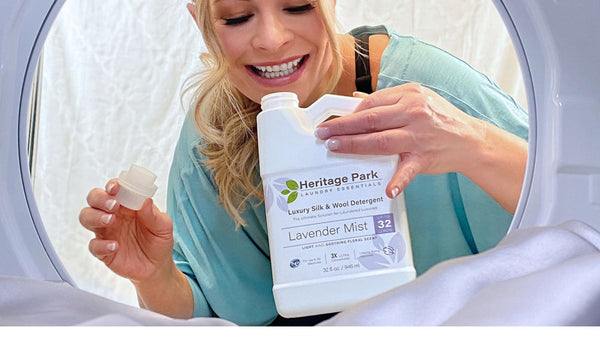
At Mulberry Park Silks, we are about so much more than just selling luxury silk sheets and pillowcases. Our bedding is a wonderful investment, and we want to give you the most for your money. Along with offering the best value in silk bedding, we explain how to care for your silk to ensure its beauty and longevity. And that starts with using the right laundry detergent for maintaining the quality of your wool and silk items: one formulated for the job like this one from Heritage Park.
But what if the detergent we recommend for delicate fabrics isn't available in your area? We understand that some of our clients, especially our European friends, can't always access our recommended products. That's why we've put together this insider's guide on what to look for-and what to avoid--when washing silk pillowcases, silk sheets, and other delicate garments like silk clothes and wool items.
The Enzyme Dilemma: Hidden Dangers for Natural Fibers
First, let's talk about things to avoid. Modern detergents often boast about their "powerful enzyme action" or "stain-fighting enzyme technology." Sometimes they are called "biological detergents." To be clear, enzymes are remarkable cleaning agents - they're effective, environmentally friendly, and excellent for washing cotton and synthetic fabrics. They're actually marvels of biotechnology that have revolutionized laundry care.
However, the same powerful cleaning action that makes enzymes great for your everyday laundry can be devastating to protein-based natural fibers like silk, wool, and cashmere.
The Protease Problem
Here's the essential fact to understand: virtually all enzyme-containing detergents include protease enzymes. Manufacturers include them because most common stains contain multiple components, and protein is almost always present:
- Food stains contain proteins, fats, and carbohydrates
- Sweat has proteins, salts, and urea
- Soil contains protein matter along with minerals
- Even cosmetics often contain protein-based ingredients
Protease works by breaking the peptide bonds that hold proteins together. It targets the amino acid chains that form protein molecules, breaking them into smaller fragments that can be washed away.
The problem is that silk and wool are made of protein. That means the very mechanism that makes proteases effective against stains also affects the protein structure of wool and silk fibers. Over time, protease can weaken the structure of protein causing fibers to lose their strength as well as elasticity, strength, sheen, and color. This process is gradual but cumulative - each wash with protease-containing detergent contributes to the breakdown. Unfortunately, enzymatic damage to the protein structure cannot be repaired.
Learn Label Language to Spot Hidden Enzymes
Manufacturers may not list individual enzymes on product labels. Instead, look for these marketing terms that signal enzyme presence:
- "Bio" or "Biological" formula
- "Enzyme action" or "Enzymatic cleaning power"
- "Stain fighters" or "Stain release"
- "Multi-action" or "Dual-action" formula
- "Advanced stain removal technology"
- Proprietary terms like "Bio-Boost," "Stain-Lift Complex," or "Active Enzymes"
If you see protease on the label, definitely avoid the product. Since protease is almost always included in an enzyme blend, seeing enzymes like amylase, lipase, cellulase, mannanase, pectate lyase, or laccase listed is a hint that protease is also present.
Beyond Enzymes: Other Harmful Ingredients to Avoid
Alkaline Compounds and pH Problems
When it comes to protecting delicate fabric like silk and wool, pH matters. Standard laundry detergent products have high pH levels (typically 9-12) to help dissolve oily stains. These alkaline detergents create an environment that is too harsh for protein fibers and will cause silk and wool to harden and grow brittle over time. You should avoid detergents that list these alkaline compounds:
- Sodium carbonate (washing soda)
- Sodium hydroxide
- Sodium silicate
- Sodium percarbonate
Your silk and wool do much better in a neutral environment (pH 6-8). Bonus: neutral pH products are also less likely to irritate your skin.
Optical Brighteners: Artificial Shine at a Cost
These synthetic chemicals make fabrics appear brighter by absorbing UV light and emitting blue light, creating an illusion of whiteness. For silk and wool, these chemicals can:
- Build up on fibers, altering their natural appearance
- Cause skin irritation for sensitive individuals
- Create uneven brightening on natural fibers
Look out for terms like "brightening agents," "whitening formula," or "makes whites whiter."
Harsh Chemicals and Additives to Avoid
Several common detergent ingredients can damage your luxury fabrics beyond repair. Chlorine bleach causes immediate and irreversible damage to protein fibers, breaking down their molecular structure on contact. Phosphates, while effective cleaning boosters, can be harsh on delicate fabrics and pose environmental concerns. Sulfates create the foaming action in many detergents but are too aggressive for silk and wool. Additionally, synthetic fragrances can cause skin irritation and build up on fibers over time, while artificial dyes add unnecessary chemicals that may transfer to light-colored silks. When selecting a detergent for your luxury items, look for products that explicitly state they're free from these harsh additives.
What You SHOULD Look for in a Silk and Wool Detergent
The best detergent for your luxury items strikes a perfect balance between effective cleaning and gentle care. Look for a gentle, pH-neutral liquid detergent (to match the natural pH of silk and wool fibers). Ensure the detergent is completely enzyme-free, especially protease-free, to avoid degrading the protein structure of your fabrics. Quality detergents for silk and wool will also be labeled as follows:
- No Sulfates
- No Phosphates
- No Dyes
- No Chlorine
- No Bleach
- No Brighteners
The best silk and wool detergents also skip artificial or heavy fragrances, which can cause irritation and residue. Instead, seek out products with biodegradable surfactants that provide gentle yet effective cleaning without compromising your luxury items' integrity.
How to Wash Silk Sheets
Machine Washing Method
-
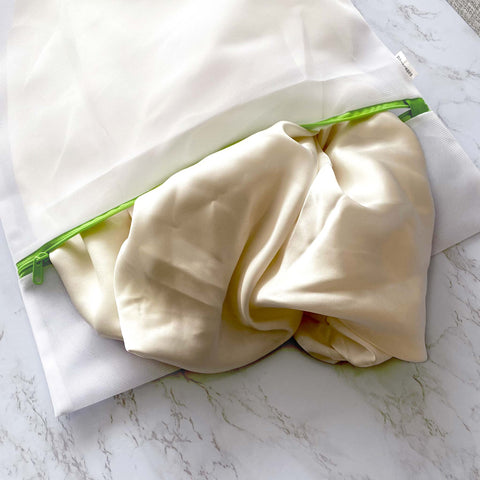
Prepare your items: Turn silk pillowcases inside out and place all silk pieces in a fine mesh laundry bag to prevent tearing.
-
Use the right water temperature: Always wash silk sheets in cold water (below 80°F/27°C).
-
Select the correct cycle: Use only the delicate, hand-wash, or gentle cycle for machine-washing silk.
-
Measure detergent carefully: Use only a small amount of specialized silk detergent.
-
Wash separately: Never mix silk with other fabrics, especially those with zippers or hooks.
-
Skip fabric softener: These leave a residue that diminishes silk's natural properties.
Hand Washing Silk
-
Fill a basin with cold water and a small amount of pH-neutral, enzyme-free laundry detergent.
-
Submerge your silk items and gently agitate with your hands (don't rub or scrub).
-
Soak for 3-5 minutes.
-
Rinse thoroughly until all soap residue is gone.
-
Press out excess water between clean towels (never wring or twist).
Drying Your Silk Correctly
-
Never use a dryer with heat - the high temperature will damage silk fibers.
-
Remove excess moisture by laying items flat between clean white towels and pressing gently.
-
Hang dry away from direct sunlight, which can fade colors and weaken fibers.
-
Iron sparingly if needed, using the lowest setting with items turned inside out.
You can adapt these steps to launder other washable silk clothes and silk products. The guidelines for washing wool and cashmere are similar. By following these instructions and selecting the right detergent, your silk and wool treasures will maintain their luxurious quality for years to come. Remember, the care you take today washing wool and silk clothes and silk bedding preserves the luxury you'll enjoy tomorrow.
As always, the Mulberry Park Silks team is here to answer any questions about silk care or our silk products. Feel free to give us a call.