How Often Should I be Washing My Silk Sheets and Pillowcases?
We get this question a lot and we always say: You should wash your silk pillowcases and sheets just as often as you would any other sheets, or, whenever they need it! One of the great things about a mulberry silk pillowcase and bed sheet is that silk bedding is naturally hypoallergenic and dust mite resistant. Even better news: you can hand or machine wash your silk pillowcase and sheets!
Guide to machine washing your silk pillowcases and silk sheets
Machine washing your silk bedding
Washing silk bedding in your washing machine is easy to do, just keep these simple guidelines in mind:
- Wash silk in a separate, silk-only, load
- Turn silk pillowcases inside out before laundering
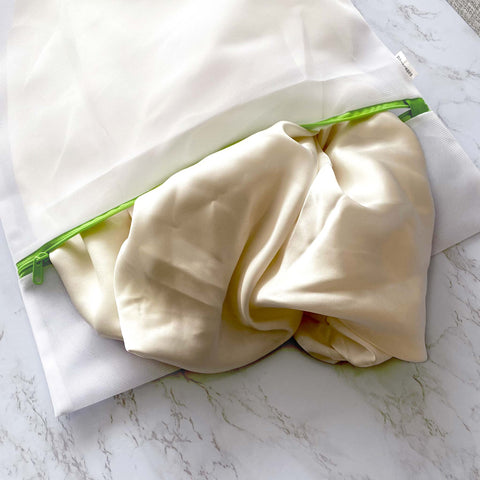
- Place all silk items in a fine mesh laundry bag to help keep the silk from tearing or pilling
- Wash silk in the delicate or gentle cycle in cool water. Temperatures above 80 degrees Fahrenheit can damage your silk bedding
- Never use bleach. Bleach will harm silks delicate fabric and cause it to yellow.
- Don't use fabric softener, it can leave residue on the silk fabric
Following these guidelines will safeguard the natural thread fibers of silk and protect the integrity of the charmeuse weave.
Hand washing your silk bedding
You can also hand wash your silk pillowcases and bed sheets. Wash your silk items by themselves in cold water. Submerge items and gently agitate with your hand; don't rub or scrub. Thoroughly rinse out all soap and blot excess water with white towels.
If you don't use the right detergent you could ruin your expensive silk sheets and pillowcases
Whether you choose to hand wash or use a washing machine, choosing a gentle detergent is an absolute necessity. Remember that silk is a natural fiber (this is part of what makes it so great for sensitive skin!). Washing it in detergents that are either too acidic or too alkaline will cause silk fiber to harden. Never use a detergent whose ingredients include cleaning enzymes. Enzymes will break down the integrity of natural fibers like silk or wool over time.
That's why we recommend a laundry detergent with neutral pH that is specially formulated for silk, like those from Heritage Park Laundry Essentials. This will help maintain the integrity of your fabric with every wash.
How you dry your silk sheets is just as important as how you wash them!
The way you dry your silk pillowcases and silk bed sheets can affect how long they last
Never wring out your silk sheets or silk pillowcases. Roll them in white towels to blot, or lay white towels out on the bed and blot sheets on top of them. Hang dry your silk pillowcases and sheets. Take special care to keep your silk items out of direct sunlight. Don't put your silk items in the dryer unless absolutely necessary. If you do use a dryer, use the "no heat" or "air only" setting.
Ironing Silk- Never or A Must?
Ironing is not always necessary. All silk products wrinkle after washing, but the threads will start to relax and straighten after a few nights' uses. If you prefer to iron, we recommend ironing just your pillowcases (since they are really all that you see) on the lowest setting available.
Always iron sparingly, only on the coolest setting with pillowcases turned inside out. We recommend that you place a cloth or towel between the iron and your silk item. A light steam will enable the iron to glide smoothly over the fabric.
- Ironing not always necessary
- Consider just ironing your pillowcases
- Iron sparingly, use the coolest setting, turn pillowcases inside out
Frequently Asked Questions About Washing Silk
Can I machine wash silk sheets and pillowcases, or do I need dry cleaning?
You can absolutely machine wash silk sheets and wash silk pillowcases at home; dry cleaning is unnecessary and expensive. When you machine wash silk, use a gentle cycle with cool water and place items in mesh bags to protect silk fibers. Many people wonder how to wash silk and assume dry cleaning is required, but both machine washing silk and hand washing silk are safe methods for cleaning silk when you use the proper silk detergent or mild detergent. Always check your care label for specific instructions, but most quality silk bedding can skip dry cleaning entirely. After machine washing silk, gently remove excess water by blotting with towels, never wringing the delicate silk fibers.
What type of silk detergent or mild detergent should I use to wash silk pillowcases?
When learning how to wash silk, always use a pH-neutral silk detergent or mild detergent specifically formulated for natural silk fibers. Avoid regular detergents with enzymes that break down protein-based fabrics. The best silk detergent for cleaning silk and protecting silk fibers is enzyme-free, like Heritage Park Silk & Wool Detergent. Whether you machine wash silk or hand wash silk sheets, using the wrong detergent can damage silk fibers permanently. Check your care label for detergent recommendations, and always choose a gentle mild detergent designed for delicate fabrics. Using proper silk detergent when you wash silk pillowcases ensures they maintain their softness and last.
Should I hand wash silk or is machine washing silk just as effective?
Both hand washing silk and machine washing silk are effective methods for cleaning silk when done correctly; the choice depends on your preference and what your care label recommends. Hand washing silk gives you more control and is gentler on silk fibers, making it ideal for delicate items or when you're new to learning how to wash silk. To hand wash silk, use cool water with mild detergent or silk detergent, gently agitate, then remove excess water by blotting. However, you can successfully machine wash silk sheets and wash silk pillowcases on a gentle cycle when using mesh bags and proper silk detergent. Both hand washing silk and machine washing silk avoid the expense of dry cleaning while protecting delicate silk fibers.
How do I properly remove excess water after I wash silk sheets without damaging them?
Never wring or twist silk fibers to remove excess water after you wash silk sheets or wash silk pillowcases as this damages the delicate fabric structure. Instead, when cleaning silk using either hand washing silk or machine washing silk methods, gently blot your items with clean white towels to remove excess water. Roll the silk in towels or lay towels flat and press down to absorb moisture without twisting. Your care label may have specific drying instructions, but the key to how to wash silk successfully is removing excess water gently. After blotting with proper silk detergent or mild detergent and removing excess water, hang your silk to air dry away from direct sunlight—this completes the washing process without needing dry cleaning.