To wash silk pillowcases and sheets, hand-wash in cold water using a gentle, pH-neutral, enzyme-free detergent (mild detergent) to protect the delicate fibers. Soak for 3–5 minutes, gently agitate without scrubbing, rinse thoroughly, then roll in a clean towel to remove moisture — never wring — and air dry away from direct sunlight. You can also machine wash silk on a delicate cycle in cold water using a mesh laundry bag and a silk-safe detergent.
Key Takeaways
You can safely machine wash silk sheets and silk bedding at home using cold water (or lukewarm water per your care instructions). Hand washing silk is gentler for delicate items like a silk scarf or silk clothing.
Always check the care label before you wash silk sheets, whether you machine wash silk or opt for hand washing silk. Use a gentle, pH-neutral, enzyme-free detergent (also known as a mild detergent) and place items in mesh bags to protect delicate fabric.
To properly dry silk bedding, never use a dryer. Hang dry silk sheets indoors or outside, away from direct sunlight.
How to Wash Silk Pillowcases and Silk Sheets
Can silk sheets be washed? We get this question a lot here at Mulberry Park Silks. And our answer is always, “Absolutely!” Your pure silk pillowcases and silk sheets are washable and it’s easy to do with the right approach. There’s no need for expensive dry cleaning; just follow our silk cleaning instructions below to properly wash this luxurious fabric. Closely adhering to these guidelines will help maintain the beauty and luxurious feel of your silk for years to come. Washing silk has never been so easy.
Do You Need to Wash New Silk Sheets and Pillowcases Before Using Them?
Properly caring for silk—including washing, drying, and storing—helps preserve its delicate texture and luxurious sheen. That said, our products are OEKO-TEX STANDARD 100 certified against over 1,000 chemicals and have been pre-washed and steamed prior to being boxed, so the choice to launder before first use is completely up to you and your preferences.
When you decide to wash for the first time, make sure to follow these simple instructions:
Always check the care label for specific instructions, as some items may require special handling. Also test for colorfastness by dabbing a damp, white cloth on an inconspicuous area; if color transfers, do not wash the item at home.
Wash your new silk sheets before using, preferably by hand in cold water. A machine wash on a cool or cold delicate cycle is also acceptable.
Silk should always be laundered separately in a SILK-ONLY LOAD. All silk items should be machine-washed in mesh laundry bags using a gentle luxury silk detergent (preferably one formulated for silk).
Wash your silk sheets with the same frequency as you would any other type of sheet or bedding, or whenever dirty or stained. Silk is naturally resistant to mold and dust mites, but still should be cleaned at regular intervals.
Line dry your silk sheets outside or hang indoors but in either case, keep them OUT OF SUNLIGHT. We don't recommend putting silk sheets in the dryer, as heat damages silk fiber. Silk dries quickly; check every few minutes and add only the time necessary to dry.
Do You Need a Special Silk Detergent?
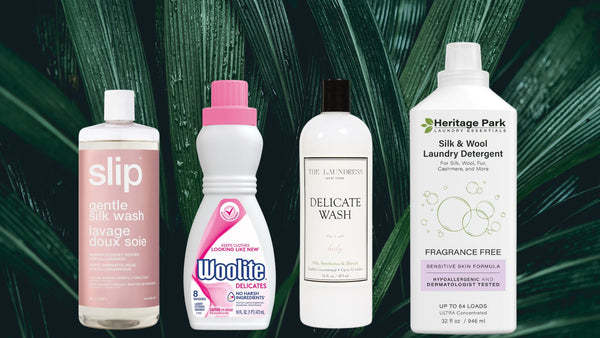
You do need a special detergent for washing silk. Avoid using “all the soap” or generic harsh detergents, as these can damage gentle fibers of silk. You want a gentle, pH-neutral, enzyme-free detergent specifically formulated for silk like Heritage Park Silk and Wool. Standard detergents contain enzymes that can degrade silk over time because it is a protein-based fabric.
The pH of your silk detergent also matters. Silk is a natural fiber (this is part of what makes it so great for sensitive skin!). Washing it in detergents that are either too acidic or too alkaline will cause those fibers to harden. Using a small amount of gentle, enzyme-free detergent with neutral pH like Heritage Park Silk and Wool will help maintain the integrity of your fabric with every wash.
What Products Should You Not Use on Silk Pillowcases and Sheets?
Avoid bleach, fabric softener, optical brighteners, and any detergent containing enzymes, as all of these can damage, discolor, or permanently degrade silk fibers.
Chlorine bleach is especially harmful and should never be used on silk. It can damage the delicate natural fibers causing yellowing, discoloration, and weakening of the fabric.
Fabric softener leaves a waxy residue that dulls silk's natural sheen and coats the fibers.
Optical brighteners are chemicals that can discolor silk and degrade the delicate fibers over time.
Enzyme detergents can do damage over time. Silk is a protein-based fiber (spun from silkworm cocoons); enzymes are designed to break down proteins, so repeated use gradually destroys silk fibers from within.
If your item is labeled "Dry Clean Only," or if you're dealing with a serious stain you can't remove at home, take it to a professional dry cleaner who specializes in silk.
Can You Machine Wash Silk?
Yes, most silk pillowcases and sheets can be safely machine washed on a delicate cycle using cold water, as long as you use a mesh laundry bag and a pH-neutral, enzyme-free silk detergent. Machine washing silk is also suitable for some silk clothes when done carefully.
Check the care label first. Items marked “Dry Clean Only” should not be machine washed.
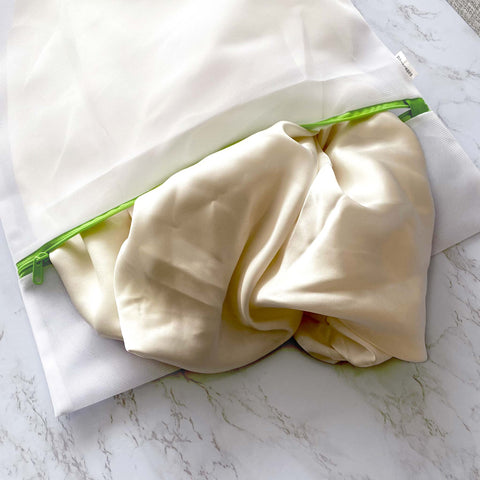
Use a fine mesh laundry bag. Place all silk items in a mesh bag before washing. Silk is lightweight and can catch on the agitator or snag on rough edges from zippers and buttons in the drum. A mesh bag protects against tearing and pulling.
Turn pillowcases inside out before placing them in the bag.
Delicate cycle and cold water only. Always use the gentle or delicate cycle (gentle cycle). High temperatures can permanently damage silk fibers.
pH-neutral, silk-safe detergent only. Use only a small amount. Never use bleach, fabric softener, or optical brighteners.
Wash in a silk-only load. Never mix silk with other fabrics, including silk clothes.
How Do You Hand-Wash Silk Pillowcases and Bedding?
To hand-wash silk (the gentlest way to clean it) use lukewarm water, a small amount of pH-neutral enzyme-free silk detergent, and gentle agitation, then air dry away from direct sunlight.
To wash your silk pillowcase by hand you will need: a clean sink or basin, cool to lukewarm water, a gentle detergent formulated for silk (like Heritage Park Silk & Wool Laundry Detergent), and two clean white towels. Never use bleach or fabric softener. Before you begin, always check the care label on your pillowcase; it will confirm whether your item can be hand washed or requires any special handling.
Test for colorfastness. Before washing, dab a damp white cloth on a small, hidden area of the fabric. If any color transfers, do not wash the item at home; instead take it to a professional dry cleaner. This ensures you can carefully wash your silk without risk of color bleeding.
Fill a clean basin or sink with lukewarm water and add detergent. Avoid hot water, which can damage silk fibers. Add a few drops of gentle, pH-neutral silk detergent and swirl gently to distribute evenly.
Submerge and soak. Place the silk pillowcase in the water and gently submerge it. Allow it to soak for 3–5 minutes to loosen dirt and oils, but do not soak for longer than 30 minutes, as this can weaken the fibers.
Gently agitate, do not scrub or wring. Gently swish the pillowcase through the water. Avoid any rough scrubbing or twisting motions, which can damage the delicate fibers.
Rinse thoroughly in cold water. Drain the soapy water and refill the basin with clean, lukewarm water. Submerge and gently swish. Then run the pillowcase under cool water for a final rinse to remove all remaining detergent. For an optional finishing step, add a small amount of distilled white vinegar to the final rinse to help restore silk’s natural sheen and remove any alkali traces from the fabric.
Gently press out excess water (never twist).. After rinsing, gently squeeze the pillowcase to remove excess water, then gently pat with a clean towel to absorb excess water. Do not wring or twist.
Roll in a clean towel to absorb moisture. Lay a clean, dry white towel flat on a surface. Place the pillowcase on top, roll both together, and apply gentle pressure to absorb excess moisture. This helps absorb excess water without damaging the fabric.
Air dry flat, away from direct sunlight. Unroll the towel, remove the pillowcase, and lay it flat on a clean dry towel or hang on a drying rack — always out of direct sunlight. As an alternative to ironing, you can slip the pillowcase onto your pillow while slightly damp and smooth out wrinkles by hand — any remaining creases should release on their own within a day or two. Avoid handling wet silk roughly, as it is more delicate when wet.
Tip: For natural stain removal, lemon juice can be used as a gentle spot treatment before washing, but always test on a hidden area first.
What's the Best Way to Dry Silk Sheets and Pillowcases?
Always air dry silk away from direct sunlight and high heat. Never use a dryer, wring, or tumble dry, as heat and agitation can damage silk fibers, cause shrinkage, and fade colors, and always absorb excess water by rolling in a towel and pressing gently before air drying. Handle wet silk with care, as it is more fragile when wet, especially if you plan to iron silk bedding and garments afterward.
Do not wring or twist. After washing, blot excess water by rolling silk in a clean white towel to absorb excess water without damaging the fibers. Alternatively, you can gently pat wet silk with a towel to absorb excess water.
Lay flat or hang in the shade. Use a clothesline, non-slip hanger, or drying rack outdoors or inside, always away from direct sunlight.
Avoid direct sunlight indoors or out. UV exposure can weaken silk fibers and fade colors, especially in darker shades.
Avoid wooden drying racks, which can leach dyes or stains into the fabric. Silk should dry in approximately 45 minutes depending on temperature and conditions.
Never tumble dry silk. Heat from the dryer can cause damage, shrinkage, or color fading. (Exception: If the dryer is absolutely necessary, use only the ‘air’ setting for 15 minutes or less with no fabric sheets or dryer balls, and remove sheets before completely dry).
How Do You Remove Stains from Silk Pillowcases and Sheets?
Act immediately and treat stains with cold water and a diluted, enzyme-free detergent; never use hot water, which can set stains and permanently damage the fibers. Using a special detergent for silk bedding will help protect the delicate fibers even during stain removal.
For most stains: Spot treat with cool water and a small amount of diluted silk-safe detergent. Always test on a hidden area first to ensure no adverse reaction. Blot gently — never rub — to avoid spreading the stain or damaging the fibers.
For natural stains: A small amount of lemon juice can be used as a gentle spot treatment, but always test on a hidden area first.
For blood stains: Act quickly. Rinse the stain immediately from the reverse side of the fabric with cold water to push it out rather than set it in. You can also soak the area in cold water. A small amount of white vinegar diluted in cold water can be used as a gentle pre-treatment.
On enzyme detergents for stains: While we recommend enzyme-free detergent for regular washing, occasional spot use of an enzyme detergent on a tough stain is usually acceptable. Test
first on an inconspicuous area. Do not use enzyme detergents for routine washing.
For stubborn stains: Consult a professional dry cleaner who specializes in silk rather than attempting to force the stain out at home.
Never use hot water on a silk stain, as heat can set the stain permanently and weaken the fibers.
Can Silk Sheets Be Ironed?
Yes, silk sheets and pillowcases can be ironed, though it is not always necessary. Always use low heat—specifically the lowest heat or silk setting—to prevent damage to the delicate fibers. Keep the item inside out, and always place a white cloth between the iron and the fabric.
All silk products wrinkle after washing, but the threads will start to relax and straighten after a few nights' use. To remove wrinkles from silk, use the lowest heat or silk setting on your iron or a steamer. Always iron clean silk while it is slightly damp, and be sure to place a white cloth or pressing cloth between the iron and the silk to prevent scorching or color transfer. If you prefer to iron, one option is to iron only your silk pillowcases (since they're all that show!) on the lowest setting available.
Read more here about how to iron silk sheets and bedding without damaging the fabric.
What's the Best Way to Store Silk Bedding?
Store silk bedding in breathable bags away from direct sunlight, with lavender sachets or cedar balls to protect against moths and humidity.
Breathable storage bag
Away from sunlight
Lavender sachets or cedar balls
What Products Should I Use to Wash Silk?
The two most important products for washing silk at home are a pH-neutral, enzyme-free silk detergent and fine mesh laundry bags. Together they protect the delicate fibers whether you hand wash or machine wash.
Fine Fabric Wash: Heritage Park Silk and Wool Delicates Detergent is the absolute best choice for washing silk. This gentle detergent is specifically formulated for cleaning silk fabric, ensuring it cleans gently and effectively without causing damage and maintains the integrity of silk, wool, linen, and other natural fibers.
Fine Mesh Laundry Bags: Using a laundry wash bag will certainly help to keep your silk pillowcases from tearing, especially if you use a washing machine that has an agitator mechanism. The light fabric of silk can sometimes catch underneath the agitator causing it to tear and pull apart the silk pillowcase. A fine mesh laundry bag will help to keep your pillowcase from getting caught and is highly recommended for all silk fabric items.
Fine Mesh Laundry Bags: Using a laundry wash bag will certainly help to keep your silk pillowcases from tearing, especially if you use a washing machine that has an agitator mechanism. The light fabric of silk can sometimes catch underneath the agitator causing it to tear and pull apart the silk pillowcase. A fine mesh laundry bag will help to keep your pillowcase from getting caught and is highly recommended for all silk fabric items.
As we noted, you should not use harsh stain removers, brighteners, or fabric softeners. You can pre-treat stains prior to laundering; always blot stains gently with a clean cloth after applying any stain treatment to avoid spreading or setting the stain further.
Mulberry Park is Your Source for Luxurious Silk Bedding
Whether your new to our bedding and accessories, or a veteran, one thing is certain — the care you put into washing and maintaining your silk pillowcases and sheets will pay off in lasting beauty, softness, and comfort for years to come.
Have questions or need personalized advice? The Mulberry Park Silks team is here to help. From choosing the right momme weight and Grade 6A silk bedding to finding your perfect silk pillowcase, we're happy to guide you every step of the way. Reach us by phone at 800-860-1924 or chat with us directly on the site. We’d love to hear from you.
Frequently Asked Questions About Washing Silk
Always use a gentle, pH-neutral, enzyme-free detergent specifically formulated for silk, such as Heritage Park Silk & Wool Detergent. Standard laundry detergents contain enzymes designed to break down protein-based stains — and since silk is itself a protein-based fiber, regular use of enzyme detergents will degrade the fabric over time, dulling its sheen and shortening its lifespan. Avoid bleach, fabric softener, and optical brighteners. Products like Woolite Delicates can work in a pinch, but a dedicated silk detergent is always the best choice for long-term care of silk sheets, pillowcases, and silk garments.
Yes. Most silk pillowcases and sheets can be machine washed on a delicate cycle in cold water, as long as they are placed in a fine mesh laundry bag first. Always check the care label; items marked "Dry Clean Only" should not be machine-washed. Use only a pH-neutral, enzyme-free detergent, avoid high spin speeds, and opt for the shortest spin cycle. Wash in a silk-only load. Hand washing is always the gentler option and is especially recommended for more delicate items like silk pillowcases and silk clothing. An extra rinse may be needed to thoroughly remove soap residue and maintain lustre when handwashing. Hang or lay pillowcase or garment flat to dry.
Wash silk items at roughly the same frequency as other fibers, typically every one to two weeks, or whenever visibly dirty or stained. Silk is naturally resistant to mold and dust mites, but still benefits from regular cleaning to remove skin oils and buildup. Always wash new silk before first use to keep it gentle on hair and skin.
Silk can shrink if washed in hot water or dried with heat. To prevent shrinkage, always use cold to lukewarm water and hang silk garments and bedding to dry away from direct sunlight. Never put silk in the dryer, as
No, Regular laundry detergents and mild soaps may contain enzymes that are designed to break down protein-based stains, and silk is a protein-based fiber. Using an enzyme detergent repeatedly will break down silk fibers over time, causing the fabric to lose its softness, sheen, and structural integrity. Always use a gentle, enzyme-free detergent formulated for delicate fabrics. This applies to silk sheets, silk pillowcases, and all silk garments.
About Author
Kendra Cosenza
With a background in the wellness industry, Kendra joined Fine Linen and Bath, our sister company, in 2011, and has since amassed over 13 years of experience in the luxury linens arena. From liaising with our manufacturers and leading our product development to coordinating with our website team, Kendra's fingerprints are on every aspect of Mulberry Park Silks. Kendra is passionate about educating our customers, asking the right questions to skillfully guide them to their perfect product. Beyond her professional pursuits, Kendra is a devoted mom to a vibrant 3-year-old son. In her downtime, she dives into the world of Lego design, races Matchbox cars, and revels in her garden and outdoor adventures with her family.
Favorite Products: Our 22 Momme pillowcases, which she credits greatly with helping clear her complexion over the years. As a toddler mom, she spends 90% of her time with her hair up and never leaves the house without one of our silk scrunchies. Not only do they safeguard her hair from the dreaded ‘hair-tie line’ of damage, but they can be dressed up or down depending on the occasion.
Mulberry Park: Accessible and Affordable Luxury Silk
We founded Mulberry Park with one simple mission: to design the highest quality silk items in the market and offer them at an affordable price. And we've done just that, with a full range of silk products made from 100% pure mulberry long strand silk fabric. The silk fabric used for our silk sheets and silk pillowcases has also been OEKO-TEX® STANDARD 100 certified to be tested for over 1000 harmful chemicals.
Visit us online or call us at (800) 860-1924 to learn more about our silk sheets, silk pillowcases, duvet covers and shams, and real silk accessories including sleep masks, travel pillows, and silk hair scrunchies.